
How Mật Pet Family Selects and Trains Staff — The Philosophy, Training System, and Human Standards Behind Vietnam's Premium Pet Shop
Discover how Mật Pet Family recruits, trains, and retains staff to premium standards. Learn the 8-week onboarding, 3-tier evaluation, and culture that ensures your pet receives expert care.
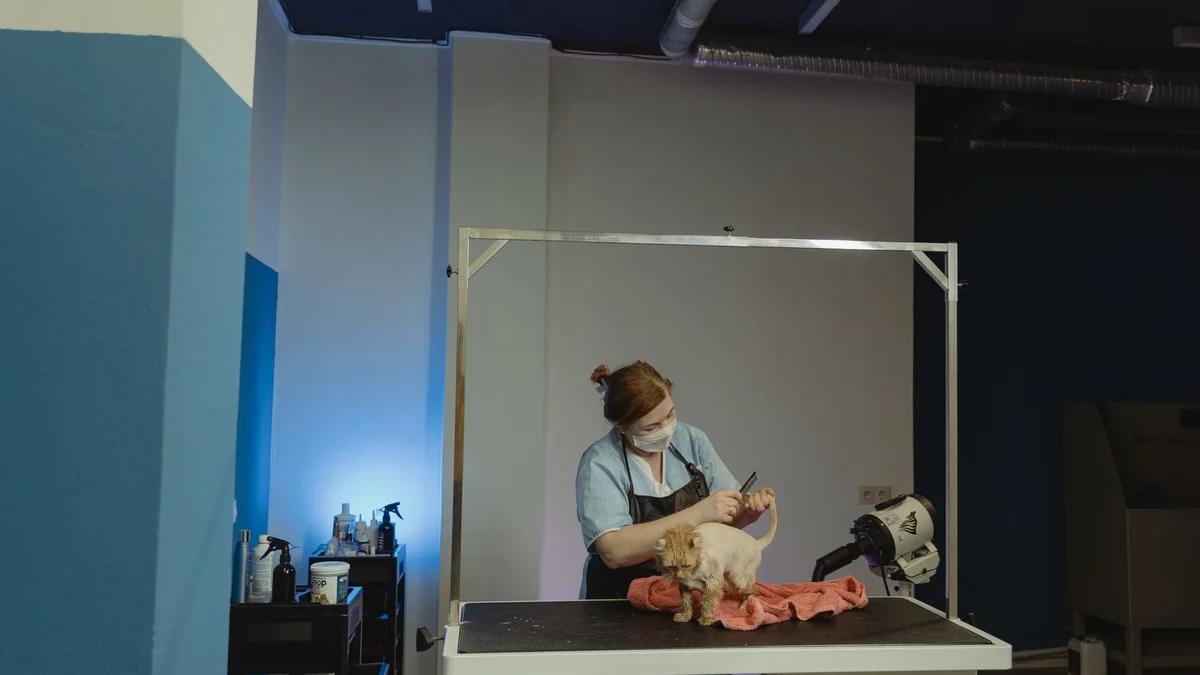
The People Behind Your Pet's Care
When you bring a puppy or kitten home, the breed matters. The food matters. But the single most important factor determining whether your pet thrives or merely survives is the person who cared for them from day one.
After 15 years caring for over 10,000 pets, Mật Pet Family learned this the hard way: staff quality is the foundation of every promise we make. Not just nice words on a website — but the daily behavior of real people handling your future family member.
Why Staff Standards Make or Break a Premium Pet Shop
Your pet's experience flows entirely from the people delivering it. From the way a nervous kitten is held on her first day at the shop, to the honest advice that helps you choose the right breed for your apartment, to the split-second decision-making when a puppy shows subtle signs of illness — none of this works without knowledgeable, genuinely caring people executing it.
Across Vietnam's pet industry, most shop staff learn by apprenticeship with no formal curriculum, no regular certification, and no accountability. Mật Pet Family chose a different path from day one in 2011: building an internal training system with international standards, then adapting it for Vietnam's tropical climate, apartment-based pet ownership, and the unique expectations of expat buyers.
The proof is in the numbers:
- Minimum training before staff ever handle a pet: 8 weeks
- Hours of theory + hands-on practice in onboarding: 120+ hours
- Staff with veterinary, biology, or animal science credentials: 60%+
Mật Pet Family's Recruitment Criteria: Three Non-Negotiables
We recruit in this priority order: (1) genuine care for animals, (2) willingness to learn and intellectual curiosity, (3) foundational technical knowledge. Technical skills can be taught. Compassion and humility cannot.
The Three Core Qualities We Look For:
Empathy with animals — Candidates go through a real-world observation test, not a written exam. We watch how they approach a frightened puppy, whether they stay calm when a kitten scratches them, whether they adjust their handling to each animal's personality. This is a behavior test, not a credentials test.
Continuous learning mindset — Veterinary knowledge evolves constantly. Our staff must be comfortable saying "I don't know, let me find out" and actually following through. We reject candidates who are defensive about gaps in knowledge.
Communication with families — Being skilled at handling a pet is half the job. The other half is explaining clearly, honestly, and warmly to real families. We don't hire people who tell customers what they want to hear; we hire people who tell them what they need to know.
Preferred Background Profiles:
- Graduates of Vietnam National University of Agriculture (VNUA), Nong Lam University (Ho Chi Minh City), or equivalent with biology or veterinary coursework
- Volunteer experience at animal rescue shelters or veterinary clinics
- Multi-year personal pet ownership — they understand the emotional reality of being a first-time pet owner
The 8–12 Week Onboarding: From Day One to Independence
Every new hire follows the same training pipeline, regardless of prior experience. No shortcuts. Three phases: foundation + observation (weeks 1–3), supervised practice (weeks 4–7), and independent evaluation (weeks 8–12).
Phase 1: Knowledge Foundation (Weeks 1–3)
Breed behavior & health literacy
- Learn temperament profiles of Vietnam's most common breeds: Poodle, Corgi, Golden Retriever, British Shorthair, Maine Coon, and 15+ others
- Recognize stress signals: panting, trembling, hiding, loss of appetite
- Spot early illness: signs of dehydration, digestive upset, fever, ear infections
Environmental health (critical in Ho Chi Minh City's climate)
- HCMC's 33–38°C heat + 70–90% humidity creates ideal conditions for bacterial growth, fungal skin infections, and parasite proliferation
- Learn standardized cage cleaning, disinfection protocols, and humidity management
- Understand why your apartment's AC temperature and air circulation matter for a newly arrived puppy
Company Health Warranty System
- Mật Pet Family operates Vietnam's only 3-tier written health warranty
- Staff must understand exactly what it covers, what it doesn't, and how to explain it honestly to families
Phase 2: Supervised Practice (Weeks 4–7)
Hands-on grooming
- Bathing, drying, and coat care under a senior groomer's direct guidance
- Learning to read an animal's comfort level and knowing when to pause or adjust technique
Customer consultations alongside a mentor
- Listening to real families' needs (not just what they ask, but what they actually need)
- Practicing honest recommendation — including "this breed may not suit your situation right now"
Health decision-making in real time
- Handling common situations: a kitten refusing food, a puppy with mild fever, a newly arrived pet showing stress behaviors
- Learning the escalation protocol: when to manage it in-house, when to immediately notify a vet
Daily health journaling
- Documenting every pet's eating, mood, stool consistency, energy level, and any anomalies
- Building the habit of meticulous record-keeping (the safety net for your pet)
Phase 3: Final Evaluation & Certification (Weeks 8–12)
Written exam — minimum 80/100 to pass; covers breed behavior, health recognition, nutrition, and company policies
Practical evaluation — department heads and management directly assess grooming skills, customer communication, and emergency response
Reflection interview — new staff share what they still feel unsure about and what they want to learn next. We reward honesty about knowledge gaps, not perfection.
Continuous Learning — Training Doesn't Stop After Onboarding
Onboarding is day one of a lifelong learning path. Every month, staff attend at least 2 internal knowledge sessions. Every quarter, practical skills are re-evaluated. Every year, the entire team completes at least 1 external certification course from veterinarians, animal nutritionists, or international grooming specialists.
Regular training topics include:
- Life-stage nutrition — how a 2-month-old puppy's diet differs from a 5-year-old adult and an 8-year-old senior; how to read commercial pet food labels critically
- Emerging diseases in tropical climates — fungal skin infections, ear infections, intestinal parasites, and seasonal illnesses specific to Southeast Asia
- Emotional intelligence for different families — communicating differently with first-time owners vs. experienced breeders, families with young children, elderly owners
- Policy updates — any changes to our health warranty, care procedures, or company standards are learned by everyone before rollout
Culture: How We Make Decisions Every Day
The best training system fails without the right culture. Ours is built on three pillars: "Tell the truth, learn fast, care genuinely."
Staff are encouraged — actually expected — to report any health concern immediately, without fear of blame. Early detection always beats covering it up. This is the only reason Mật Pet Family can credibly offer a health warranty; we catch problems before they become disasters.
Three core cultural rules:
- "Pet first, process second" — if a kitten needs help now, no one waits for approval to act
- "Don't guess, don't wait" — any ambiguous health sign goes straight to a vet; we never self-treat and watch
- "Be transparent with the family" — if their new pet is struggling to adjust, we tell them proactively and offer guidance, not silence
This culture wasn't created by posters or slogans. It was built by founders Sếp Mai and her team making the same decisions consistently for 15 years — and hiring people who value the same principles.
Does Staff Investment Affect Your Costs?
Yes. And we're honest about it.
Systematic training, competitive salaries to keep talented people, and rigorous internal quality control all cost money. This is a core reason Mật Pet Family operates in the premium segment, not the discount segment. But the cost reflects what you actually receive:
- Expert-level care — not guesswork from someone who "learned on the job"
- Honest advice — including "this breed isn't right for you yet"
- Full health transparency — daily logs from day one, shared with you
- Real support after you take your pet home — not a goodbye, but ongoing partnership
When you choose a pet from Mật Pet Family's showroom, much of what you're investing in isn't just an animal — it's the system of people who prepared them for you.
FAQs: Staff, Standards, and Your Pet's Safety
Do all Mật Pet Family staff have veterinary degrees?
No, but 60%+ have backgrounds in veterinary science, animal biology, or agricultural education. Staff without formal credentials complete 120+ hours of internal training before ever handling a pet — exceeding many countries' standards for shelter workers. We value character and aptitude as much as credentials.
How do I know my pet is being well cared for while at Mật Pet Family?
Every pet maintains a daily health log covering appetite, energy, stool health, behavior, and any observations. You receive photo/video updates and can contact our hotline 0939 863 696 anytime. Transparency is a core value, not an afterthought.
Does Mật Pet Family work with veterinarians?
Yes. We partner with a network of trusted clinics in Ho Chi Minh City. Our escalation protocol is clear: any health concern — even minor — goes to a vet immediately. We don't diagnose or self-treat. This is part of our 3-tier health warranty model.
Are staff trained in pet psychology and behavior?
Absolutely. Recognizing stress, anxiety, and behavior problems is mandatory curriculum. Staff learn how to approach frightened animals, how to design low-stress environments for newly arrived pets (especially important for kittens separated from their mothers), and how to counsel families on behavioral issues at home.
Do you listen to customer feedback about staff quality?
Yes — and it directly affects staff development. Customer feedback is reviewed monthly, discussed in internal team meetings, and influences training priorities and performance reviews. This is a real feedback loop, not a suggestion box you never check.
Next Steps: Meet the Team
Behind every dog or cat from Mật Pet Family is a team of people who trained for weeks, study every month, and show up every day because they genuinely care. If you want to learn more about our care standards, meet the team in person, or get honest advice about whether a particular breed fits your life in Vietnam — reach out.
Contact us:
- Hotline: 0939 863 696 (English-speaking staff available)
- Visit the showroom: matpet.vn/showroom in Ho Chi Minh City
- Read more about our philosophy: What Is Mật Pet Family? — 15 years building Vietnam's pet care standard
Your pet's first days in our care shape their entire life with you. We don't take that lightly.
Related articles

How Mật Pet Family Names Every Pet — Philosophy, Process, and the Story Behind Each Name

How Mật Pet Family Selects Breeders — 5-Tier Standards, On-Site Vetting Process, and Transparent Origin Guarantees in Vietnam

Mật Pet Family's Vision for the Future — How Vietnam's Premier Pet Shop Is Setting a New Standard (15 Years and Counting)
Interested in pets from Mật Pet?
15 years of trust · 10,000+ pets delivered to Vietnamese families · Free 30-day health warranty · Nationwide delivery.