
Music, Podcasts & TV for Pets in Vietnam — Do They Really Help Dogs and Cats Relax When Home Alone?
Does music or TV actually calm pets when alone? Mật Pet Family shares science-backed insights, which sounds work best, and how to set up a sound environment for expats in Vietnam.
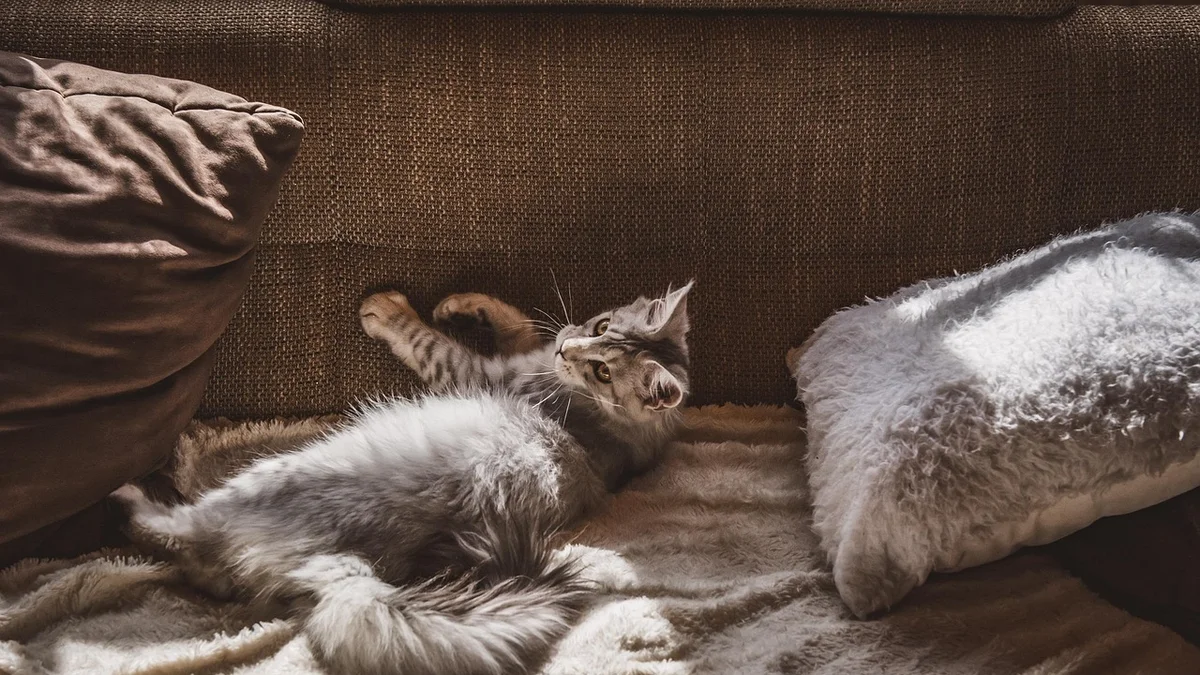
Every morning when you lock the apartment door in Ho Chi Minh City or Hanoi and leave your dog or cat behind in a quiet room, that's the longest stretch of the day your pet has to manage their own emotions. Research from the University of Glasgow (2017) found that over 60% of dogs show clear stress signals after spending more than 4 hours alone. The question every expat pet owner asks: Does turning on music, a podcast, or the TV before you leave actually help — or is it just something that makes us feel better about leaving?
Short answer: yes, it helps — but only certain types, played the right way. After 15 years of supporting over 10,000 pet families across Vietnam, we've seen what genuinely works and what's just social media hype.
Do Dogs and Cats Actually "Hear" and Respond to Sound When Home Alone?
Yes — but not the way humans listen to music. Dogs and cats don't understand lyrics or melody in an aesthetic sense, but their nervous systems respond distinctly to sound frequency, rhythm, and volume. Animal behavior research shows that continuous background sound in the 50–65 dB range measurably reduces heart rate and destructive behavior in dogs left alone.
Here's the science:
- Dogs hear across 40 Hz to 65,000 Hz — roughly twice as sensitive as humans in high frequencies. Bass-heavy sounds (above 80 dB) or sudden noises trigger alertness, not relaxation. This is especially relevant in Vietnamese apartments where traffic noise from the street creeps in constantly.
- Cats hear 45 Hz to 79,000 Hz and are extraordinarily sensitive to high-frequency sounds. EDM, aggressive music, or even overly cheerful children's songs can make a cat more tense, not calmer.
- "White noise" (like a gentle fan sound) at 55–60 dB has been documented to reduce continuous barking in apartment-dwelling dogs — a common problem in high-rise condos across HCMC.
The key insight: it's not whether you play sound, it's what type and how you use it that determines whether your pet benefits.
Which Music Actually Helps Dogs Relax — and Which to Avoid?
Slow classical music (60–80 BPM) and reggae are the two genres most validated by veterinary behavior research to reduce stress in dogs. Pop, rock, EDM, and any music with aggressive or high-pitched vocals typically increases heart rate and restless behavior.
Music and sounds WORTH trying for dogs:
- Gentle classical: Mozart, Debussy, Satie — steady 60–80 BPM, no sudden crescendos. These are the safest bet.
- Reggae: An SPCA Scotland study (2015) tracking 38 dogs found reggae and soft rock elicited the most relaxed behaviors — almost as reliable as classical.
- Nature sounds: rain, streams, gentle wind. Especially useful for dogs in HCMC apartments stressed by street noise; these create a kind of acoustic "wall" that masks traffic.
- Species-specific pet music: Channels like "RelaxMyDog" or "Music for Cats" use frequencies (300–600 Hz for cats) researched by veterinary music therapists at universities in the US. These are free or cheap on YouTube and Spotify.
Sounds to AVOID:
- Heavy bass (above 80 dB)
- News podcasts, debate shows, or anything with raised voices/arguing
- Upbeat children's content (faster tempo, louder volume — overstimulating despite seeming cheerful)
- Randomly selected TV without thought to content
A small insider tip from 15 years of Mật Pet Family experience: Don't just hit play and leave. First, play the same music or sound while you're home for 3–5 days. This teaches your pet to associate that audio with normalcy and safety — then when you play it before leaving, it signals "this is okay, nothing to worry about." This conditioning step makes all the difference.
How Do Cats React to Music Differently Than Dogs?
Cats have a completely different hearing profile and are unfortunately underrepresented in pet-music research, which tends to focus on dogs. For cats, music specifically designed for their hearing range (300–1,500 Hz) — mimicking kitten vocalizations and bird sounds — works far better than generic classical music.
- Researcher Charles Snowdon at the University of Wisconsin (2015) developed "species-appropriate music" tuned to cats' natural frequency range. His studies found 77% of cats turned toward the speaker and showed relaxed body language when hearing this music, versus only 20% with standard classical.
- Cats in HCMC apartments — where traffic roars from 7 AM to 10 PM constantly — often benefit most from white noise at 55 dB as a sound "barrier" to mask outside chaos.
- Ideal volume for cats: 45–55 dB (noticeably quieter than dogs at 55–65 dB). Cats' hearing is more acute; they need less volume to notice the sound.
If your cat hides in a dark corner, stops eating when you leave, or over-grooms (licks excessively), these are stress red flags. Sound helps, but so does consulting with a vet early. Mật Pet Family's lifetime health warranty and behavioral support covers initial behavior guidance.
Does TV and Video Really Work, or Is It Just Social Media Trend?
TV and screens do have real effects on some pets — but not a magic cure-all, and not equally for every pet. Let's be direct: DogTV isn't a substitute for your presence, but it can help certain dogs feel less alone.
For dogs:
- Dogs perceive TV differently than humans — their eyes process at 70–80 frames per second (human eyes ~24 fps). Older TVs under 60Hz flicker to dogs like a strobe light. Modern 4K/OLED TVs are finally smooth enough for dogs to "watch" meaningfully.
- DogTV (available on streaming platforms) is designed with colors dogs can see (blues and yellows), slower frame rates, and calm background music. Cost: roughly 7–10 USD/month (~175,000–250,000 VND).
- Dogs typically engage with the screen for 15–30 minutes, then lose interest. This is normal — it doesn't mean it's ineffective. The point is occupied time, not sustained entertainment.
For cats:
- Cats react strongly to moving images — videos of birds, fish, or insects can trigger hunting instinct and keep a cat active instead of sedentary all day.
- However: if your cat constantly "attacks" the screen without catching anything, repeated failure might frustrate rather than satisfy. Balance action videos with calm nature scenes.
- Practical tip: alternate between dynamic prey-movement videos and peaceful nature footage (forests, ocean) to avoid over-stimulation.
Real Vietnam context: Running a 43-inch TV for 8 hours continuously costs roughly 1.5–2 kWh, or about 4,000–5,000 VND per day — trivial. Just place it where your pet can't leap up and pull it down.
Do Podcasts with Human Voices Actually Reduce Separation Anxiety?
Yes — a human voice your pet knows is more comforting than music, particularly for dogs with separation anxiety. A stranger's voice or an agitated tone, however, can backfire.
- A small shelter study in the UK (2019) found dogs displayed more calm behaviors (lying down, stopped barking) when listening to audiobooks in calm, steady tones versus complete silence.
- Soft-spoken podcasts with no sudden laughter, shouting, or debate — roughly 50–60 dB — work as decent background audio during business hours.
- Mật Pet Family hack used by hundreds of families in our 8.7-million-member community: record 30–60 minutes of your own voice — reading a story, describing your day, or just chatting naturally — and set it to play during the hours your pet struggles most (usually 9–11 AM for dogs, since you've just left). Your pet hears your voice without you being present, which is oddly reassuring.
- Cats don't bond to owner voice as strongly, but calm, low-frequency voice work (100–500 Hz) can still have a neutral-to-positive effect.
Critical caveat: if your pet shows severe anxiety — destroying furniture, self-harm, not eating — sound is only a surface-level fix. Behavior consulting from a vet is necessary. This is not a failure on your part; it's solvable with proper intervention.
How to Set Up a Simple "Sound Environment" for Your Pet at Home Alone
You don't need expensive equipment. A good Bluetooth speaker, the right playlist, and correct setup are enough to create observable improvement within 1–2 weeks.
Simple setup checklist:
- Choose a good speaker: a mini Bluetooth speaker costing 300,000–800,000 VND is perfect. Prioritize mid-range volume distribution, not maximum loudness. Position it 1.5–2 meters from your pet, not right next to their ears.
- Select the right playlist:
- Get the volume right: download a free decibel meter app on your phone, measure where your pet typically rests, and aim for 50–60 dB for dogs, 45–55 dB for cats. This matters — a guess will often be too loud.
- Condition your pet first: play this sound 3–5 days while you're home. Let your pet associate it with normal, safe life. Only on day 6–7 play it when leaving.
- Track results: after 2 weeks, assess. Is your pet calmer? Any neighbor complaints? Is eating/drinking normal? If stress persists despite sound, other factors (room temperature, light, boredom) or professional behavior guidance may be needed.
Room comfort (a cool spot under 30°C during Saigon summer, soft bedding, natural light) matters as much as sound. For a complete environment, check our pet enrichment setup guide to combine all elements.
What's the Actual Cost to Build a Sound Environment for Your Pet in Vietnam?
One-time setup cost ranges from 300,000 to 1,500,000 VND — mostly a one-time investment, depending on what you choose.
- Item — Estimated Cost
- Bluetooth speaker (JBL Go, Anker Soundcore mini) — 300,000–800,000 VND (~12–32 USD)
- DogTV subscription (if you choose) — ~180,000–260,000 VND/month (~7–10 USD/month)
- Music playlists (YouTube, Spotify free) — 0 VND
- Decibel meter app — 0 VND
- Pet monitoring camera (optional but highly recommended) — 500,000–1,200,000 VND (~20–48 USD)
Why a camera? For 500,000–1,200,000 VND (Xiaomi or TP-Link Tapo models widely available in Vietnam), you see exactly how your pet behaves when alone — is the music actually helping, or is your dog still anxious? This real data lets you adjust sound type, volume, and timing without guessing. It's one of the smartest small investments for any expat with a pet.
Daily ongoing cost (electricity + Spotify, if you subscribe): roughly 3,000–8,000 VND — less than a premium treat.
Frequently Asked Questions About Sound and TV for Pets
Q: Is it harmful to leave music playing all day long?
No — playing appropriate music at 50–65 dB for 8–10 hours daily is safe. But do allow quiet periods too. Constant sound without breaks can become background noise your pet stops registering. Aim for 6–8 hours of audio, with silent or near-silent windows. Never leave sound running through the night while your pet is trying to sleep.
Q: My pet doesn't react to music at all — is it pointless?
No visible reaction doesn't mean no effect. If your dog is lying calmly and not barking, or your cat isn't hiding in distress, that's a positive outcome. Only switch tactics if you see increased anxiety (more barking, pacing, not eating) after introducing sound — then try a different type.
Q: Should I play music before I leave, or teach my pet to be okay with silence?
Both approaches can work; it depends on your pet's temperament. If your dog or cat shows clear stress signals (destructiveness, refusal to eat, excessive vocalization), sound is a helpful tool. If your pet is naturally calm, silence is fine. Observe for 1–2 weeks before deciding.
Q: What's the single best music choice for cats?
Music designed specifically for cats (300–1,500 Hz range, like "Music for Cats" by David Teie) outperforms classical music. Nature sounds (especially bird calls at lower volumes) are a close second and work for many cats.
Q: Do I really need a camera to monitor my pet?
Not required, but strongly recommended for expats. Cameras at 500,000–1,200,000 VND let you confirm your pet is actually relaxed — or reveal they're still pacing anxiously despite music, which tells you to adjust your approach. Peace of mind for you, better data for your pet.
Q: My pet shows severe anxiety even with music — what's next?
Sound alone won't fix clinical separation anxiety. Consult a veterinary behaviorist. This is treatable but requires structured counterconditioning, sometimes combined with medication. Mật Pet Family offers lifetime behavioral guidance as part of our comprehensive support — contact us to schedule a consultation.
The Bottom Line
Your dog or dog spends 8–10 hours a day home alone — that time deserves thoughtful attention. A carefully chosen playlist or white noise won't replace your presence, but it can genuinely calm your pet's nervous system and reduce destructive behaviors. The difference between the right sound and no sound is often visible within a week.
Start small: grab a speaker, choose one playlist suited to your pet's species, measure the volume, condition your pet for a few days, then deploy when you leave. Watch the results. If your pet seems calmer, you've found something valuable. If not, a vet behaviorist can explore deeper causes.
After 15 years supporting Vietnamese families with their pets, we've learned that the pets thriving longest and happiest are those in homes where the owner observes and adjusts. That's what separates a happy, confident pet from an anxious one — not perfection, but attention.
If you'd like personalized advice for your specific dog or cat — whether it's separation anxiety, enrichment setup, nutrition, or just a general check-in — our team at Mật Pet Family is here. We've guided over 10,000 pets through their journey in Vietnam, and we'd love to support yours.
📞 Consultation Hotline: 0939 863 696 (English-speaking support available) 🌐 Visit us: matpet.vn | Showroom & locations
Because every pet deserves a home where they're understood — and every expat deserves to leave their pet knowing they're okay.
Related articles

Designing a Pet-Friendly Home Office in Vietnam — Space Layout, Equipment & How to Balance Work and Your Dog or Cat

Pet Photography Through Vietnam's Four Seasons — Lighting, Backgrounds & Tips for Year-Round Beautiful Shots

Saying Goodbye to Your Pet — A Compassionate Guide to Grief, Memory, and Healing for Expat Families in Vietnam
Interested in pets from Mật Pet?
15 years of trust · 10,000+ pets delivered to Vietnamese families · Free 30-day health warranty · Nationwide delivery.