
Birman Cats in Vietnam — Breed Characteristics, Temperament & Complete Care Guide for Expats
Birman cats: 3.5–7 kg, long soft coat, distinctive white paws, sapphire eyes. Breed profile, temperament, care in Vietnam's heat & humidity — expert guide from Mật Pet Family.
What Makes the Birman Cat Special — And Why Expats in Vietnam Are Choosing Them
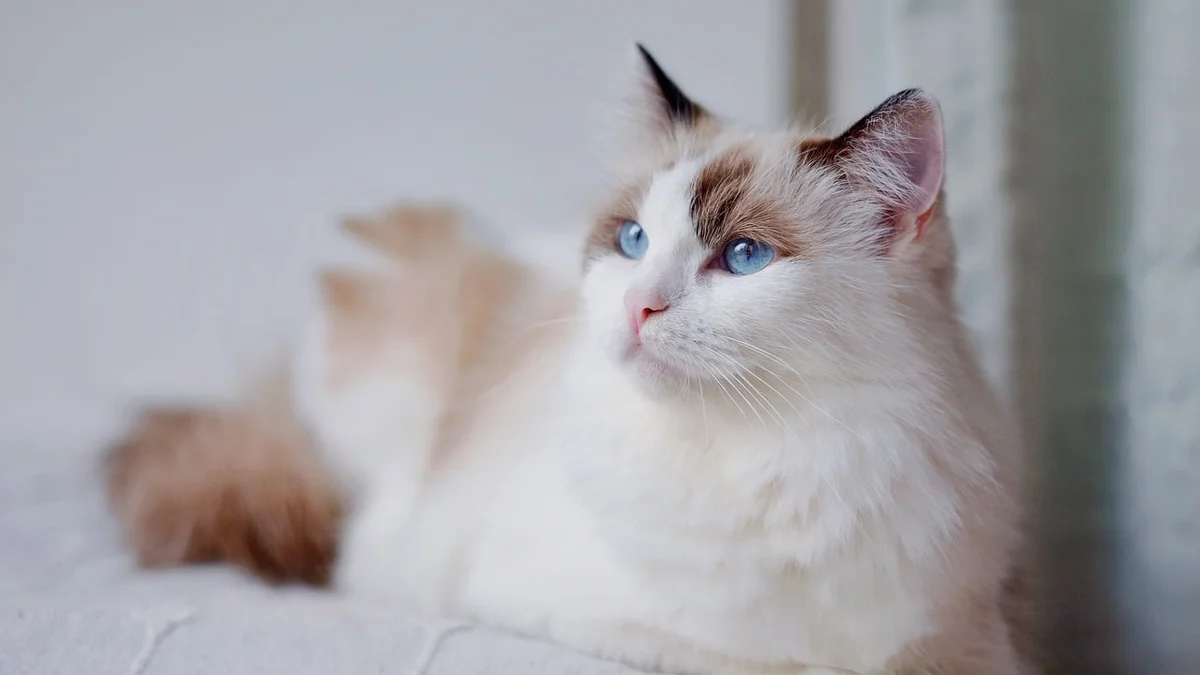
The Birman cat — also called the "Sacred Cat of Burma" — is a long-haired breed with four distinctive white paws (like wearing white gloves), deep sapphire-blue eyes, and a temperament so calm that Vietnamese pet owners affectionately call them "meditation cats." Unlike Persian or Maine Coon cats, which are common in Vietnam's pet market, Birmans are still relatively rare — but they're gaining popularity among expat families and Vietnamese households in HCMC and Hanoi for one simple reason: they balance show-stopping beauty with genuinely easy-going personalities.
If you're an expat looking for a cat that's elegant without being high-maintenance, or a family wanting a pet that fits apartment living without being aloof, the Birman deserves serious consideration.
What Exactly Is a Birman Cat, and Why Are They Growing in Popularity in Vietnam?
The Birman cat is a purebred long-haired breed originating from Burma (Myanmar) with official recognition dating back to the 1920s in France. Adult Birmans weigh 3.5–7 kg, sport a thick, silky coat that doesn't mat easily, have four distinctive white paws, and possess those signature sapphire-blue eyes. This combination of elegance and approachability has made them an increasingly attractive alternative to more demanding breeds in Vietnam's pet market.
Compared to Persians (which require extensive grooming and are prone to health issues), or British Shorthairs (affectionate but less interactive), Birmans offer the best of both worlds: a beautiful coat that's easier to maintain than a Persian's, plus genuine engagement and companionship. For families with young children or expats living in HCMC or Hanoi's compact apartments, Birmans consistently rank high among the recommendations made by Mật Pet Family's team after understanding each family's lifestyle needs.
How Do You Identify a Purebred Birman? Key Physical Traits
A true purebred Birman has three unmistakable identifying features: (1) all four paws must be completely white — this is a breed standard requirement; (2) semi-long, silky coat that resists matting far better than a Persian's; (3) deep sapphire-blue eyes with no color variation. If a cat is missing even one of these traits, the breeding lineage warrants verification.
Detailed Birman breed standards:
- Weight: Males 5–7 kg, females 3.5–5.5 kg when fully mature (around 18–24 months old)
- Coat: Semi-long hair, dense and soft, with significantly less undercoat than Persians, making it less prone to matting and easier to manage
- Color patterns: Multiple point colorations exist — seal point (dark brown), blue point (grayish-blue), chocolate point, lilac point, red point, cream point — with a lighter body and darker face, ears, and tail
- Paws: All four paws pure white; females should have white extending above and below the paw ("gloves and laces"), while males need only white on the front paws
- Eyes: Deep sapphire blue, round and medium-sized, never protruding
- Build: Medium to large frame with visible muscle definition — unlike the slight, fine-boned Siamese or the stocky, round Persian
Does the Birman Temperament Fit Vietnamese Family Life?
Birmans are known for being gentle, affectionate without being clingy — they'll follow you from room to room but won't cry for constant attention like a Siamese. They're excellent with children and other pets, tolerate household noise well, and adapt beautifully to apartment living in spaces as small as 50 m².
Specific temperament traits expat and Vietnamese families consistently report:
- Quiet presence: Birmans vocalize rarely and softly — ideal for apartment buildings with shared walls
- Affectionate but independent: They prefer sitting beside you over climbing onto your lap — perfect for active families with young children
- Multi-pet friendly: Birmans typically integrate well with other cats and dogs if introductions are done gradually and correctly
- Moderate energy: They enjoy play sessions (15–20 minutes daily) without being destructive or overly demanding
- Flexible daily schedule: They adapt well to families where owners work full days, provided they have toys and adequate space
- Emotional intelligence: Birmans seem to sense when you're stressed and will quietly settle nearby without pestering — a quality many expat owners mention as surprisingly comforting
Caring for a Birman in Vietnam's Hot, Humid Climate — What You Need to Know
Birmans originally come from temperate mountain regions, so they can struggle in Vietnam's heat and humidity — especially when temperatures exceed 33–35°C. They need air-conditioned rooms maintained at 24–27°C during hot months (March–May), consistent access to fresh water, and limited time on balconies during midday sun.
Practical care considerations for Vietnam:
Temperature and living space:
- Maintain room temperature at 24–27°C ideally; avoid exposing your Birman to environments above 32°C for more than 2 consecutive hours
- Birmans tolerate heat significantly worse than short-haired breeds — watch for signs of heat stress: panting, sprawling flat, lethargy
- HCMC apartment living is actually ideal because most units have reliable air conditioning; houses need careful attention to ventilation and airflow
Coat care in humid conditions:
- High humidity (HCMC typically 75–85%) doesn't directly damage the Birman coat, but it can cause matting if grooming isn't consistent — brush 3–4 times per week
- During rainy season (May–November): dry your cat promptly if they've been near a balcony, and check between paws and skin folds more frequently for moisture and fungi
- Bathing once monthly is sufficient — bathing too frequently strips natural oils and leads to coat damage
Health and immune response:
- Birmans don't have specific vulnerabilities to Vietnam's climate if vaccinations are current and litter boxes are kept scrupulously clean
- Keeping your cat exclusively indoors (the gold standard in Vietnam for safety and health) prevents parasitic infections, contagious diseases, and traffic accidents
What Should a Birman Eat, and How Much Food Do They Need in Vietnam?
An adult Birman requires approximately 60–80 kcal per kilogram of body weight daily. For a 4 kg female, that's roughly 240–320 kcal per day — equivalent to about 60–80g of high-quality dry food or 150–200g of wet food/pâté. The best approach combines both dry and wet food to ensure adequate hydration.
Practical feeding schedule by age:
- Kittens 2–6 months: 3–4 meals daily; prioritize kitten-specific food with minimum 30% crude protein
- Kittens 6–12 months: 2–3 meals daily; begin gradual transition to adult food
- Adult cats 1–7 years: 2 meals daily; combine high-quality dry kibble with wet food or fresh cooked meat
- Senior cats 7+ years: Switch to senior formula; reduce phosphorus to protect kidney function
In HCMC and Hanoi, reputable brands easily found include Royal Canin Persian (compatible with other long-haired breeds like Birmans), Hill's Science Diet, and Orijen Cat & Kitten. Always ensure fresh, clean water is available 24/7 — Birmans tend to drink less than they should, making a cat water fountain a worthwhile investment to encourage hydration.
For dietary adjustments based on your cat's specific health needs, always consult a veterinarian rather than self-adjusting portions.
Common Health Issues in Birmans — What Should You Monitor?
Birmans are generally hardier than many long-haired breeds, but they do carry some inherited genetic risks: hypertrophic cardiomyopathy (HCM — a heart condition) and polycystic kidney disease (PKD). Reputable breeders conduct regular genetic screening and health checks. Consider this when selecting a kitten, and schedule routine cardiac ultrasounds starting at age 3.
Key health issues to monitor:
- HCM (Hypertrophic Cardiomyopathy): Common across long-haired breeds; have an ultrasound screening every 1–2 years starting at age 3
- PKD (Polycystic Kidney Disease): Genetic testing is available early; reputable breeders will provide PKD-negative test results
- Dental disease: Birmans tend to accumulate tartar; brush teeth 2–3 times weekly and have veterinary dental checkups annually
- Obesity: Indoor Birmans gain weight easily, especially after spaying/neutering — monitor weight monthly and adjust food portions proactively
- Hairballs: Long coats are prone to hairball formation — offer hairball-control treats and brush daily during shedding seasons to minimize risk
Any unusual signs — not eating for 24+ hours, reduced urination, wheezing, or lethargy — warrant immediate veterinary attention. Mật Pet Family's health warranty policy is Vietnam's only written guarantee supporting your cat's health from day one, giving you peace of mind.
The Real Cost of Owning a Birman in Vietnam — What to Budget
Purebred Birman kittens in Vietnam typically cost 8–25 million VND (roughly 320–1,000 USD) depending on lineage, color, and breeder reputation. Monthly care costs average 1.5–3.5 million VND (60–140 USD), including food, litter, and grooming. First-year veterinary costs (vaccinations and baseline screening) add approximately 2–4 million VND (80–160 USD).
Initial purchase and setup:
- Birman kitten price: 8–25 million VND (depends on color, sex, pedigree)
- Litter box and litter: 300,000–800,000 VND
- Food and water bowls or fountain: 200,000–600,000 VND
- Cat tree and scratching posts: 500,000–2,000,000 VND
- Transport and initial setup: 300,000–500,000 VND
Monthly ongoing costs:
- Dry and wet food: 500,000–1,200,000 VND per month
- Litter: 200,000–400,000 VND per month
- Toys, treats, and coat care products: 200,000–400,000 VND per month
- Professional grooming/bathing (optional, 1–2 times monthly): 200,000–500,000 VND per session
Annual veterinary expenses:
- Booster vaccinations: 400,000–700,000 VND annually
- Deworming (every 3 months): 200,000–400,000 VND annually
- Annual health checkup (1–2 visits): 300,000–600,000 VND per visit
In total, expect to invest 20–40 million VND (800–1,600 USD) during your cat's first year, then 18–42 million VND (720–1,680 USD) annually thereafter — a reasonable investment for a 12–16 year companion.
Birmans vs. Ragdolls — Which Breed Is Right for You?
Birmans and Ragdolls both have long coats, blue eyes, and gentle temperaments, but they differ significantly. Ragdolls are substantially larger (5.5–9 kg) and tend to go limp when picked up — they're extremely people-dependent. Birmans are smaller (3.5–7 kg), more agile, and maintain greater independence despite being affectionate.
Is a Birman Right for HCMC or Hanoi Apartment Living?
Absolutely. Birmans are quiet, non-destructive, and require only moderate daily activity — they thrive in apartments from 50 m² upward. As long as your space has air conditioning (24–27°C), adequate daylight or enrichment items, and 15–20 minutes of interactive play daily, your Birman will be content.
How Much Does Birman Coat Shedding Really Happen, and Is It Hard to Groom?
Birman coat shedding is significantly lighter than Persian or Maine Coon shedding because they have less undercoat. Brushing 3–4 times weekly prevents matting and tangles. During shedding seasons (typically March–April and September–October in Vietnam), daily brushing for 3–4 weeks helps manage the extra hair loss.
When Is a Birman Fully Mature?
Birmans mature slowly compared to other cat breeds — they reach full adult size around 18–24 months old. Their coat doesn't achieve its full thickness and length until roughly age 2, so patience is required before your Birman displays the classic breed appearance.
Where Can I Buy a Purebred Birman in HCMC?
Choose a pet shop with transparent breeding sources, complete health documentation, and PKD test results on file. You can view available Birman kittens at Mật Pet Family's showroom or browse the current cat catalog for detailed profiles and to arrange a consultation.
How Long Do Birmans Typically Live?
With proper care — regular veterinary checkups, complete vaccinations, balanced nutrition, and safe indoor living — Birmans typically live 12–16 years. This is a genuine long-term commitment worth considering carefully before bringing a kitten home.
Bringing Your Birman Home — Mật Pet Family's Lifetime Commitment
A Birman cat brings more than beauty into your home — they offer a quiet, calming presence that many expat owners describe as genuinely therapeutic. If you're searching for a feline companion that's both visually stunning and emotionally intelligent, without demanding constant attention or complex grooming routines, the Birman cat is worth serious consideration.
With 15 years of experience since 2011 and care for over 10,000 pets, Mật Pet Family's team is ready to help you find the right Birman kitten — whether you're focused on a specific color, temperament, or health profile. We'll walk you through every step, from initial consultation to lifetime support, using Vietnam's only written pet health warranty to back our commitment.
Message Mật Pet Family to discuss which Birman kitten might be the perfect fit for your household, or visit our showroom in person to meet available kittens face to face.
Hotline: 0939 863 696 (English-speaking team available).
Related articles
Norwegian Forest Cat: Breed Profile, Temperament & Complete Care Guide for Vietnam's Climate

Doberman Dogs in Vietnam — Breed Profile, Temperament & Complete Care Guide for Expats

Cavalier King Charles Spaniel in Vietnam — Breed Profile, Temperament & Complete Care Guide for Expats
Interested in pets from Mật Pet?
15 years of trust · 10,000+ pets delivered to Vietnamese families · Free 30-day health warranty · Nationwide delivery.