
British Shorthair Cats in Vietnam — Breed Profile, Temperament, and Care Guide for Expats
Thinking of getting a British Shorthair in Vietnam? Mật Pet Family covers temperament, heat care, costs & health risks — 15 years of local expertise.
What is the British Shorthair, and why is it so popular in Vietnam right now?
The British Shorthair (BSH) is one of the oldest recognised cat breeds in the world, originating in England and formally standardised as a pedigree breed in the 19th century. In Vietnam, it has consistently ranked among the top three best-selling purebred cats — sitting just behind Munchkin and Persian — and its popularity has only accelerated since around 2018.
The appeal is easy to understand: BSH cats look like living teddy bears, carry themselves with calm self-assurance, and adapt remarkably well to apartment life. That combination is a near-perfect match for how most people in Ho Chi Minh City and Hanoi actually live.
Why the British Shorthair works so well in a Vietnamese household:
- Thrives in apartments from 30–80 m² — no garden or large space needed
- Quiet and not destructive when given adequate toys and scratching posts
- Dense short coat is easy to maintain — no daily detangling sessions
- Independent enough to handle an owner who works a full 8–10 hour day
- Lifespan of 12–17 years — a genuinely long-term companion
For expats, there are a few extra reasons BSH makes sense. The breed's calm temperament means it handles the inevitable disruptions of expat life — furniture changes, new flatmates, occasional travel — with more composure than more anxious breeds. And if you ever need to relocate out of Vietnam, a well-socialised BSH adapts to carrier travel and new environments better than most cats (more on relocation later).
What does a British Shorthair actually look like?
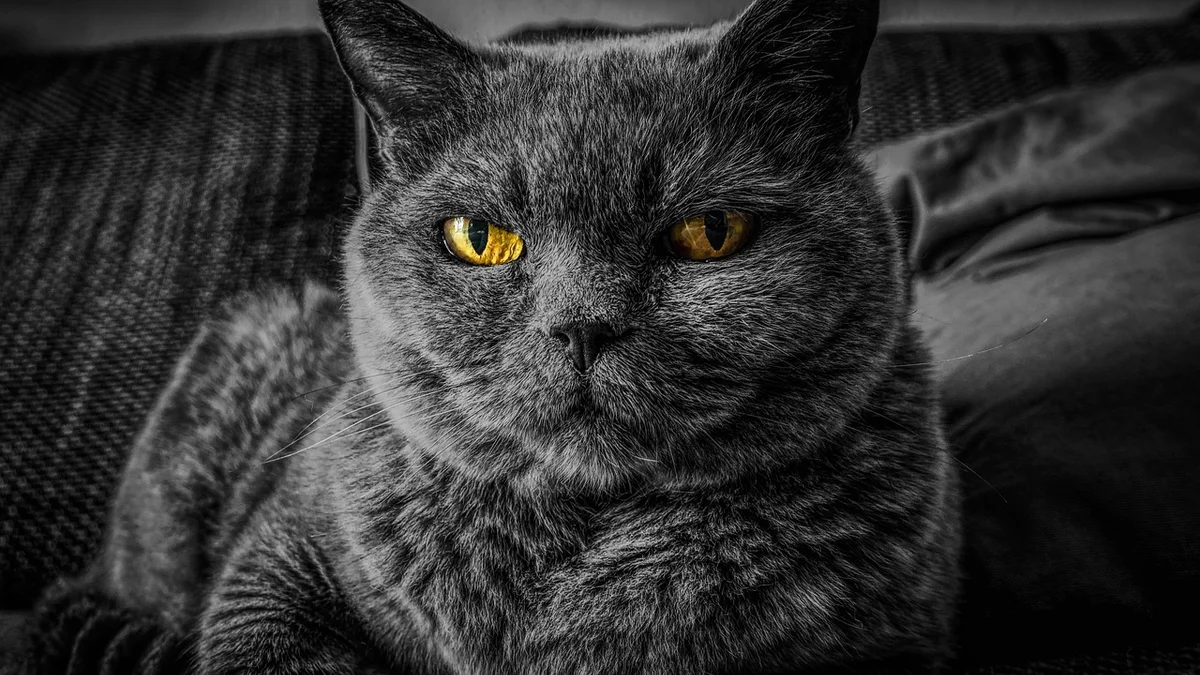
The BSH is immediately recognisable: a stocky, round body, a broad round head, full chubby cheeks, a short nose, and small rounded ears. Adults weigh between 4–8 kg, with males typically running noticeably heavier than females. Shoulder height is around 30–35 cm. The eyes are large and round — copper, gold, or blue depending on coat colour — and carry the breed's signature expression of composed, faintly amused observation.
Coat colours most commonly available in Vietnam:
- Colour — Common Name — Market Popularity
- Solid blue-grey — Blue / Blue Solid — ★★★★★
- Blue-grey tabby / spotted — Blue Tabby / Blue Spotted — ★★★★☆
- Cream / white — Cream / White — ★★★☆☆
- Solid black — Black Solid — ★★★☆☆
- Pale lilac — Lilac Solid — ★★☆☆☆
- Two-tone — Bicolour — ★★★☆☆
The classic blue-grey coat is by far the most sought-after and the most photographed — it's the colour that made BSH a social media fixture across Vietnam and globally.
One important structural note about the coat: BSH fur is a true "double coat" — dense, plush, and slightly standing away from the body rather than lying flat. It feels distinctly like velvet, and that texture is a key way to distinguish a proper BSH from a generic domestic shorthair.
A buying red flag to watch for: A correctly bred British Shorthair has a straight nose — not pushed in. If you see a BSH-labelled kitten with a deeply flattened, Persian-style nose, it has likely been crossbred or is a non-standard variant. Flat-nosed cats can develop lifelong breathing difficulties. A reputable breeder or pet shop will always be upfront about this.
Is the British Shorthair's temperament right for my lifestyle in Vietnam?
BSH temperament is one of the breed's greatest selling points — and genuinely well-suited to the way many expats live in Vietnam. These cats are calm, low-drama, and not clingy. They enjoy being near you without needing to be on top of you. They rarely scratch without provocation and handle household noise and foot traffic with quiet equanimity.
Who is a good match for a British Shorthair?
- ✅ First-time cat owners — predictable, even-tempered, forgiving of rookie mistakes
- ✅ Families with children aged 4+ — BSH rarely lashes out even when pestered
- ✅ Singles or couples living in an apartment, away from home most of the day
- ✅ Multi-person households — BSH adjusts well and doesn't bond exclusively to one person
- ⚠️ People who want a highly playful, acrobatic cat — BSH are happiest as calm observers, not climbers
- ⚠️ Introducing alongside a dog for the first time — allow a proper 2–4 week introduction period
The one thing to respect: BSH cats dislike being scooped up and held against their will. Let them come to you on their terms and you'll find they become deeply, quietly loyal. Push the affection and they'll simply walk away — no drama, just a dignified exit.
For expats who travel domestically or regionally and leave the cat with a pet sitter, the BSH's independent streak is actually an asset. They don't pine visibly and they transfer their trust to a reliable caretaker relatively smoothly.
How do I care for a British Shorthair in Vietnam's hot, humid climate?
This is the question that matters most for anyone keeping a BSH in southern Vietnam. The breed was developed for temperate Britain — think 10–20°C. Ho Chi Minh City regularly hits 33–40°C from April through June, with high humidity year-round. Northern Vietnam (Hanoi, Da Nang) is more seasonal but still gets brutal humid summers.
The good news: after caring for over 10,000 pets since 2011, the team at Mật Pet Family has seen BSH cats thrive in Vietnam — but only when owners take the climate seriously.
Essential heat and humidity management:
- Air conditioning: Keep your living space at 24–27°C. During the hot season in HCMC (April–June), don't leave a BSH in a room without climate control when outdoor temperatures exceed 32°C. This is non-negotiable.
- Shedding seasons: BSH shed heavily in March–May and September–November. Brush 3–4 times per week during shedding periods, 1–2 times per week otherwise. This reduces hairballs and keeps your furniture manageable.
- Hydration: Heat increases water needs significantly. Place multiple water bowls around the apartment, or invest in a pet water fountain — running water encourages cats to drink more, which directly lowers the risk of kidney stones and urinary tract disease.
- Ear hygiene: Vietnam's humidity (70–90% year-round) creates ideal conditions for ear infections. Wipe ears gently with a vet-approved ear cleaner once or twice a month.
- Bathing: Once every 6–8 weeks is plenty. Use a pH-neutral cat shampoo and dry thoroughly with a hairdryer immediately after — in humid Vietnam, even slightly damp fur can lead to skin fungal issues.
For expats living in older apartments without central air, a portable A/C unit or at minimum a well-positioned fan and a cool tiled floor space (BSH love tiles in the heat) can help bridge the gap — but if your space regularly exceeds 30°C indoors, a BSH may struggle.
What should I feed my British Shorthair in Vietnam?
BSH cats have a known tendency toward weight gain — partly genetics, partly their preference for lounging over leaping. An adult BSH needs roughly 50–70 kcal per kg of body weight per day. For a typical 5 kg cat, that's around 250–350 kcal daily, split across two meals (morning and evening).
Feeding schedule by life stage:
- Under 6 months: 3–4 meals/day, kitten formula with minimum 30% protein
- 6–12 months: 3 meals/day, gradually transitioning to adult food
- 1–7 years: 2 meals/day, combination of dry kibble and wet food (70:30 or 50:50 split)
- 7+ years: 2 meals/day, senior formula with reduced phosphorus to protect kidney function
Brands readily available in Vietnam that suit BSH well:
- Dry kibble: Royal Canin British Shorthair Adult (formulated specifically for the breed), Hill's Science Diet, Orijen
- Wet food / pâté: Fancy Feast, Sheba, Monge — all widely stocked at pet shops nationwide
- Avoid completely: Human food, anything high in salt or seasoning, and cow's milk — adult cats are lactose intolerant
Kidney stones and FLUTD (feline lower urinary tract disease) are the two health risks most directly tied to diet in BSH. Wet food significantly increases moisture intake and is one of the simplest preventive measures you can take. If your cat is reluctant to drink from a bowl, a fountain is worth every dong.
What health problems do British Shorthairs commonly develop?
Compared to flat-faced breeds like Persian and Exotic Shorthair, the BSH is a relatively robust breed. But "relatively robust" doesn't mean problem-free — there are two serious genetic conditions and several environmental risks that every BSH owner in Vietnam should understand before bringing one home.
Genetic conditions to know:
- Polycystic Kidney Disease (PKD): A hereditary condition passed through a recessive gene. It can be identified via DNA testing or ultrasound. When buying a BSH, always ask for a PKD-negative certificate — reputable breeders and shops test for this routinely.
- Hypertrophic Cardiomyopathy (HCM): The most common heart disease in cats, and BSH are genetically predisposed. Schedule a cardiac ultrasound once or twice a year from year two onward, particularly for males.
Environmental and lifestyle health risks:
- Obesity: BSH are couch athletes. An adult female should ideally weigh 4–7 kg; a male 5–8 kg. If your cat is creeping past those numbers, adjust portions immediately — extra weight accelerates joint and kidney problems.
- Urinary tract disease (FLUTD) and kidney stones: Directly linked to insufficient water intake — address this proactively with wet food and a water fountain.
- Ear infections: Vietnam's humidity makes this a recurring issue if you don't maintain monthly ear cleaning.
When to go to the vet immediately: loss of appetite for more than 24 hours, reduced or bloody urination, laboured breathing, or sudden lethargy. Don't wait and don't self-diagnose — these symptoms can escalate fast.
Mật Pet Family backs every BSH that leaves our care with a health warranty policy — the only written health guarantee of its kind in Vietnam — so you know the cat you're bringing home has been fully checked before handover.
A note for expats on finding English-speaking vets: Veterinary care in HCMC and Hanoi has improved dramatically in recent years. For English-speaking recommendations, the expat Facebook groups (Expats in Ho Chi Minh City, Hanoi Expats) and InterNations Vietnam chapters are consistently good sources of up-to-date vet referrals. Ask specifically for experience with purebred cats if HCM screening is a priority.
How much does it cost to own a British Shorthair in Vietnam?
Purchase prices for BSH in Vietnam range from 3–25 million VND (roughly 120–1,000 USD) depending on coat colour, pedigree documentation, and health certification. Beyond the purchase price, budget 800,000–2,000,000 VND per month (approximately 32–80 USD/month) for ongoing costs.
Reference cost breakdown:
- Item — Estimated Cost (VND) — Approx. USD
- BSH — no papers, blue solid — 3–8 million — ~120–320 USD
- BSH — pedigree + PKD-negative cert — 10–25 million — ~400–1,000 USD
- Dry kibble + wet food / month — 400,000–800,000 — ~16–32 USD
- Litter tray + litter / month — 150,000–300,000 — ~6–12 USD
- First-year vaccinations (3 shots + rabies) — 600,000–1,200,000 — ~24–48 USD
- Annual booster vaccinations — 300,000–600,000 — ~12–24 USD
- Routine vet check (twice yearly) — 300,000–800,000 per visit — ~12–32 USD/visit
- Premium litter / month — 100,000–250,000 — ~4–10 USD
- Toys and scratching post (one-time) — 200,000–500,000 — ~8–20 USD
- Neutering / spaying — HCMC clinics — 500,000–2,000,000 — ~20–80 USD
The pedigree premium is worth it: A BSH with PKD-negative certification and a registered pedigree costs more upfront, but significantly reduces the risk of expensive hereditary disease treatment down the line. Over a 12–17 year lifespan, that's a calculation worth making carefully.
For expats planning to eventually relocate out of Vietnam: keep documentation for every vaccination and vet visit from day one. Most countries require a full medical history, microchipping, and rabies titre testing before allowing a cat to enter. Requirements vary significantly by destination country — always verify current regulations with the relevant embassy and a vet experienced in international pet transport well before your planned move date. General guidance: allow a minimum of 3–6 months for documentation preparation, and potentially longer for countries with strict quarantine rules (Australia, UK, New Zealand, Japan).
Browse purebred cats currently available at Mật Pet Family for up-to-date pricing and health status on specific kittens.
FAQ — British Shorthair cats in Vietnam (expat edition)
Is a British Shorthair a good cat for apartment living in HCMC or Hanoi?
Yes — the BSH is arguably the single best apartment cat you can get in Vietnam. It doesn't need room to sprint, doesn't yowl at 2 a.m., and is content to nap on your sofa while you're at work. An apartment of 30 m² or larger is genuinely sufficient for one or two BSH cats, as long as the room temperature stays at 24–27°C.
How long does it take for a British Shorthair to fully mature?
Longer than you'd expect — BSH don't reach their full size and weight until 3–5 years of age. A two-year-old BSH still looks somewhat juvenile even though it is technically an adult cat. Spaying or neutering should happen before 6–8 months regardless of this slow physical development.
Can a British Shorthair live with a dog in Vietnam?
Usually yes, with the right introduction. Separate the animals into different rooms for the first 1–2 weeks and allow scent exchange before any face-to-face meeting. BSH are less prone to panic than more nervous breeds, but they still need at least 2–4 weeks to accept a dog as part of the household. A calm, medium-sized dog tends to work better than a very high-energy breed.
Do I need to neuter or spay my British Shorthair in Vietnam?
Yes — vets universally recommend it. Neutering extends lifespan, significantly reduces the risk of reproductive cancers, and prevents territorial spraying in males. In HCMC, the procedure costs 500,000–2,000,000 VND (approximately 20–80 USD) depending on the clinic. Do it before 6–8 months of age.
How often does a British Shorthair need bathing in Vietnam's climate?
Once every 6–8 weeks is the right frequency. The double coat is naturally self-cleaning and doesn't need frequent washing. What matters more — especially in Vietnam — is regular brushing (2–4 times per week) to manage shedding and prevent hairballs. Always dry the coat completely after bathing; damp fur in a humid climate is a recipe for skin fungal infections.
What is the difference between British Shorthair and British Longhair?
British Longhair (BLH) shares the same body type, face structure, and temperament as BSH — the only difference is coat length. BLH have a semi-long, silky coat that requires daily brushing during shedding season. In Vietnam, BLH are rarer and typically priced 20–40% higher than their shorthaired counterparts.
I'm an expat planning to leave Vietnam in 2–3 years — should I still get a British Shorthair?
Many expats successfully relocate BSH cats internationally, and the breed's calm temperament genuinely helps during travel. The critical step is to start building your cat's documentation from day one: microchip, vaccination records, and regular vet check-ups. Research your destination country's import requirements early — some countries (Australia, UK, New Zealand, Japan) have lengthy quarantine or pre-export testing requirements that need to begin months in advance. Talk to a vet who has experience with international pet transport; they can map out a timeline specific to your destination.
Looking for a British Shorthair in Ho Chi Minh City? Mật Pet Family can help
If you're considering bringing a BSH home, the advisory team at Mật Pet Family is happy to walk you through choosing the right kitten for your living space, budget, and lifestyle — in English. Founder Sếp Mai (Ms. Mai) built this business from the ground up in 2011, and in 15 years we've helped thousands of families — including a growing number of expat households — find the right cat and care for it well.
Every purebred cat that leaves our care comes with a full health check and Vietnam's only written pet health warranty. Visit the Mật Pet Family showroom in HCMC to meet available BSH kittens in person, or call our hotline at 0939 863 696 — English-speaking support is available. We're with you from first consultation through the full journey of cat ownership.
Related articles
Border Collie Dogs in Vietnam — Breed Profile, Temperament, and Complete Care Guide for Expats
Siamese Cats in Vietnam — Breed Profile, Temperament, and Complete Care Guide for Expats
Bengal Cats in Vietnam — Breed Profile, Temperament & Care Guide for Expats
Interested in pets from Mật Pet?
15 years of trust · 10,000+ pets delivered to Vietnamese families · Free 30-day health warranty · Nationwide delivery.