
Walking Your Dog in Vietnam — Safe Schedules, Essential Gear, and Street-Smart Skills for Expat Pet Owners
How to walk your dog safely in Vietnam's heat: best times, harness vs collar, gear checklist, leash training tips. Expert advice from Mật Pet Family — 15 years experience.
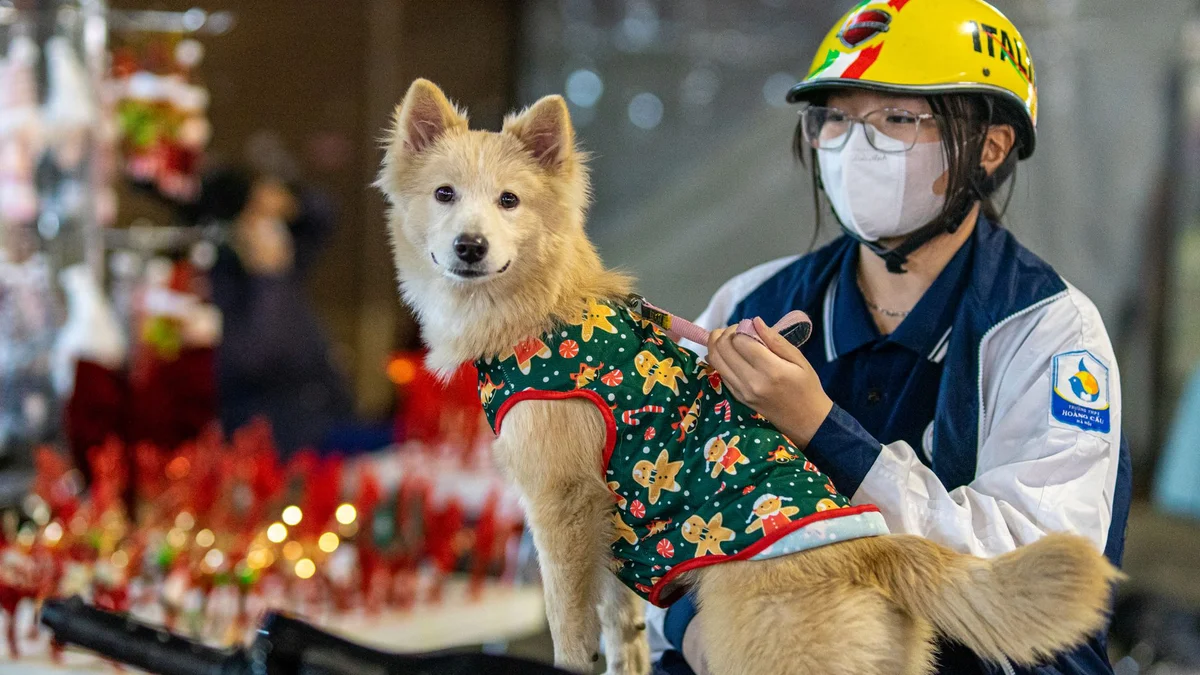
Whether you've just arrived in Ho Chi Minh City with your dog or recently adopted one here, walking your dog in Vietnam is a genuinely different experience from back home. The heat, the traffic, the motorbikes, the street food scraps on every pavement — it all adds up to a unique set of challenges that most expat dog owners figure out the hard way. This guide distills what the team at Mật Pet Family has learned over 15 years and 10,000+ pets cared for, so you don't have to.
Does my dog actually need regular walks if we have a decent-sized apartment?
Yes — absolutely, and arguably more so than dogs with a garden at home. Regular outdoor walks aren't a luxury; they're a core physiological and psychological need for most breeds. Dogs confined indoors without structured outdoor exercise tend to accumulate excess energy, which comes out as destructive chewing, excessive barking, anxiety, and — over time — obesity.
For dogs weighing 5–30 kg, veterinarians generally recommend a minimum of 20–30 minutes of walking per day. In our experience caring for thousands of dogs at Mật Pet Family since 2011, one of the most common root causes of negative behaviour — not the only one, but a very common one — is a lack of structured outdoor movement. It's rarely about toys or food. It's about the daily mental stimulation that only a proper walk provides: new smells, sounds, and environments that keep a dog's brain engaged.
For expats living in apartment buildings across HCMC, Hanoi, or Da Nang, this is especially relevant. Most mid-range and high-end apartment complexes in Vietnam have ground-floor areas, parking levels, or nearby streets that work just fine for a short walk — you just need to plan around the heat.
When is the best time to walk my dog in Ho Chi Minh City and southern Vietnam?
In southern Vietnam, the two safe walking windows are before 7:30 AM and after 5:30 PM. This isn't just about air temperature — it's about the pavement. Asphalt surface temperatures in HCMC at midday routinely hit 55–65°C (130–150°F), which is enough to cause paw burns within five minutes of contact, even when the air temperature "only" reads 35°C.
Quick pavement test before every walk: press the back of your hand flat on the pavement for five seconds. If you can't hold it there comfortably, it's too hot for your dog's paws.
When choosing your route, prioritise shaded streets, grass verges, and tiled footpaths over exposed asphalt. Avoid the 10 AM–4:30 PM window entirely during the dry season hot months (roughly March–May).
Seasonal timing guide for southern Vietnam:
- Season — Morning window — Afternoon/evening window
- Dry season (Nov–Apr) — 6:00–8:00 AM — 5:30–7:30 PM
- Rainy season (May–Oct) — 6:00–8:00 AM — 5:00–7:00 PM (before the afternoon downpour)
For thick-coated or heat-sensitive breeds — Huskies, Pomeranians, Chow Chows, and similar — shorten each session to 15–20 minutes maximum and watch closely for heatstroke signs: continuous heavy panting, a bluish or very dark tongue, stumbling, or sudden lethargy. If you see these, get your dog into shade or air conditioning immediately and contact a vet.
A note for expats in Hanoi and Da Nang: Hanoi has a genuine winter (December–February) when early mornings can feel cold by Vietnamese standards (10–15°C). This is actually the most comfortable walking season for most breeds. Da Nang sits in between — milder than HCMC but with a typhoon-season wet period (October–December) to plan around.
Harness or collar — which is safer for walking my dog in Vietnam?
For most dogs — and especially small breeds and flat-faced breeds — a harness is safer than a standard collar for walks. A collar that gets yanked hard puts direct pressure on the trachea and cervical vertebrae. For small dogs under 5 kg (Chihuahuas, toy Poodles, Pugs), this can cause real damage over time.
Here's a quick comparison of the main options available in Vietnam:
Collar + standard leash: Fine for well-trained dogs that don't pull. Prices range from around 80,000–250,000 VND (roughly 3–10 USD).
H-harness (figure-H design): Distributes force across the whole torso. Ideal for small dogs and pullers. Prices from 150,000–450,000 VND (roughly 6–18 USD).
No-pull harness (front clip): Has a chest attachment ring that redirects a pulling dog back toward you rather than letting them power forward. Excellent for leash training. Prices from 200,000–600,000 VND (roughly 8–24 USD).
Head collar (steering halter): Designed for large, strong dogs (20–40 kg) that pull heavily. Works like a horse halter — steering the nose steers the dog. Needs gradual introduction. Not a muzzle.
On leash length: A fixed 1.2–1.5 m leash gives you the control you need on busy Vietnamese streets. Retractable leashes (3–5 m) are only appropriate in wide open parks with low foot traffic — never near roads. The reaction time on a retractable leash is simply too slow when a motorbike cuts in front of you.
For a full gear checklist before you start a walking routine, see our guide to essential pet accessories for dogs and cats in Vietnam.
What should I bring on every dog walk in Vietnam?
A safe walk in Vietnam requires at minimum five things: fresh water, waste bags, a few small training treats, a backup leash, and your dog's ID information. Many owners skip the preparation and end up flustered when their dog goes to the bathroom in front of a shop or a stray dog comes charging out of an alley.
What you carry:
- ✅ Small water bottle + collapsible bowl — dogs need water every 15–20 minutes when it's above 32°C
- ✅ 3–5 waste bags per walk (poop bags run 10,000–30,000 VND per roll of 15 — cheap insurance against neighbour complaints)
- ✅ 5–10 small kibble pieces or soft treats for reinforcing good behaviour on the walk
- ✅ A short backup leash clipped to your belt or bag
- ✅ An ID tag with your Vietnamese phone number on your dog's collar, or a GPS tracker collar
Your dog's checklist:
- ✅ Harness or collar fits correctly — snug but two fingers should slip underneath easily
- ✅ Vaccinations current — especially rabies, leptospirosis, and parvovirus. See the pet vaccination schedule guide for timing and costs in Vietnam
- ✅ Flea and tick prevention applied if walking in parks or grassy areas
Expat note on ID tags: if your dog has a microchip registered in another country, that chip number may not be easily traceable in Vietnam. Always add a local phone number tag. If you're planning to eventually relocate your dog out of Vietnam, keep a record of the microchip number and ensure it's ISO 11784/11785 compliant — this is typically required for international pet travel. Check current import/export regulations with your destination country's embassy and a vet who handles international pet travel, as rules change.
How do I train my dog to walk on a loose leash and stop pulling?
The most effective technique for stopping leash pulling is the "stop and stand" method: every single time the leash goes taut, you stop moving completely and don't take another step until there's slack in the leash again. No shouting, no yanking back — just a full, calm stop. Repeated consistently over 7–14 days, most dogs make the connection.
Five-step process for teaching heel:
- Start indoors or in your apartment corridor — minimal distractions, easy to control
- Dog stands on your left, level with your leg — reward immediately when your dog holds this position for 3–5 seconds
- Step forward with your left foot, say "let's go" or "heel" — dog follows → reward
- Stop the moment the leash tightens — don't punish, don't pull back, just stop
- Build distance gradually — 10 steps → 30 steps → one lap of your floor → then out on the street
Puppies can start this process from 8 weeks old. Adult dogs (1–3 years) take more patience but typically pick it up within 2–4 weeks of 10–15 minute daily sessions. For rescue dogs or dogs with zero leash experience, a professional trainer consultation is well worth the cost — Mật Pet Family can point you in the right direction if you call the hotline.
How do I handle a stray dog encounter or other street hazards in Vietnam?
When an unknown dog approaches, the safest immediate response is to shorten your leash to 30–50 cm, position your body between your dog and the approaching dog, and hold your ground calmly. Most dog-on-dog conflicts happen in the first three seconds of face-to-face contact — controlling that gap is everything.
Reading dog body language:
- Friendly dog: tail wagging loosely at mid-height, relaxed body, ears in natural position
- Anxious or defensive dog: tail stiff or tucked, hackles up, stiff posture
- Potentially aggressive dog: low growl, entire body rigid, hard unblinking stare
Common Vietnam-specific situations and what to do:
- Unleashed stray approaching: change direction early and calmly — do not run, as running triggers chase instinct
- Loud motorbike horn close by: desensitise your dog to traffic sounds at home first, starting with low-volume recordings before progressing to the real thing
- Child rushing up to pet your dog from above: politely ask the child (or their parent) to approach from the side, not directly over the dog's head — this applies everywhere but comes up constantly in Vietnam where children are often very enthusiastic
- Dog sniffing or trying to eat street food/rubbish: the "drop it" command needs to be trained at home before it'll work reliably on the street — this one is genuinely important in HCMC where pavement snacks are everywhere
How much does it actually cost to walk your dog properly in Vietnam each month?
Maintaining a safe, consistent walking routine in Vietnam costs roughly 300,000–1,500,000 VND per month (around 12–60 USD), depending on breed size and individual needs. The biggest ongoing costs aren't the gear — they're preventive health: flea/tick treatment and scheduled vaccinations.
One-time equipment costs:
- Item — Standard — Premium
- Dog harness — 150,000–300,000 VND (~6–12 USD) — 400,000–900,000 VND (~16–36 USD)
- Fixed leash — 80,000–200,000 VND (~3–8 USD) — 300,000–600,000 VND (~12–24 USD)
- Water bottle + collapsible bowl — 50,000–120,000 VND (~2–5 USD) — 200,000–400,000 VND (~8–16 USD)
- Engraved ID tag — 30,000–80,000 VND (~1–3 USD) — 150,000–300,000 VND (~6–12 USD)
Ongoing monthly costs:
- Waste bags: 30,000–80,000 VND (~1–3 USD)
- Flea/tick spot treatment (one pipette per month): 80,000–250,000 VND (~3–10 USD) depending on your dog's weight
- Training treats: 50,000–150,000 VND (~2–6 USD)
If you're buying gear in Vietnam, the biggest practical tip is to go in person and measure your dog's girth and weight on the spot before purchasing a harness. Online sizing charts for Vietnamese-market harnesses are inconsistent, and a harness that's even slightly too loose is a safety risk — dogs can back out of them on the street. The team at Mật Pet Family's showroom will fit the harness on your dog directly.
Frequently asked questions about walking your dog in Vietnam
Do apartment dogs in Vietnam really need outdoor walks every day?
Yes — more so than dogs with garden access. Without a yard to self-exercise, apartment dogs depend entirely on their owner for physical and mental stimulation. Aim for at least twice a day, 15–30 minutes per session. Even laps around your apartment building's ground floor or parking area count and are far better than nothing.
How old does my puppy need to be before I can take it outside for a walk in Vietnam?
Wait at least one to two weeks after your puppy's second vaccine dose — typically around 10–12 weeks of age — before letting them walk on surfaces frequented by other dogs. Before that, you can carry them outside to observe the environment and get used to noise without the infection risk of ground contact. For the full vaccination timeline and costs, see the pet vaccination schedule for dogs and cats in Vietnam.
Is walking five days a week enough, or does it have to be every single day?
Every day is ideal. If your schedule doesn't allow it, four to five times per week with longer sessions (40–60 minutes each) is workable for most small to medium breeds. The key is consistency — irregular bursts of exercise followed by long sedentary stretches are harder on a dog than moderate, regular walks.
What do I do on heavy rain days? (This is a real concern in Vietnam's rainy season.)
For light rain, a dog raincoat (100,000–300,000 VND, around 4–12 USD) works fine and most dogs get used to them quickly. After any wet walk, dry the coat thoroughly and clean between the paw pads carefully — moisture trapped there causes fungal skin issues and interdigital cysts. For heavy downpours (common in HCMC from May to October), substitute with 20–30 minutes of indoor play or training to burn off energy.
My dog is 8–10 years old. Does it still need regular walks?
Absolutely — but dial back the intensity. Senior dogs benefit from shorter, gentler walks (10–20 minutes) on soft surfaces to reduce joint stress. If your dog limps, lags behind, or seems stiff after a walk, have a vet check joint health before continuing the same routine. Arthritis is common in older dogs and very manageable once diagnosed.
Do I need to muzzle my dog when walking in public areas in Vietnam?
Vietnamese law does not currently mandate muzzles for all breeds in public, but individual apartment buildings, parks, and gated communities may have their own rules — worth checking with your building management. For dogs over 20 kg or any dog with a history of snapping or biting, a muzzle is a responsible precaution rather than a punishment. Introduce it gradually at home with positive reinforcement so your dog associates it with good things before it has to be used outside.
As an expat, where can I find English-speaking vets in Vietnam?
The expat Facebook groups for your city are the best real-time resource: search for "expat HCMC pets" or "Hanoi expat dogs" and you'll find recommendations from people in the same situation. Internations groups in HCMC and Hanoi also maintain informal vet recommendation lists. Mật Pet Family's team speaks enough English to handle basic consultations and can refer you onward for specialist care — call the hotline and ask.
Start your dog-walking routine today
Walking your dog properly is one of the highest-return habits you can build as a pet owner in Vietnam. A well-exercised dog is calmer, healthier, less destructive, and — honestly — a much more enjoyable companion. If you're not sure which harness fits your dog's body type, what leash setup suits your neighbourhood, or how to adapt a walking routine for a breed you've just adopted, the Mật Pet Family team is ready to help.
Mật Pet Family has been Vietnam's go-to pet shop since 2011 — and as the first pet shop in Vietnam to offer a health warranty policy, every pet from Mật Pet comes with ongoing health monitoring that gives you peace of mind on every single walk.
📞 Hotline: 0939 863 696 — English support available 🏠 Visit the Mật Pet Family showroom for hands-on harness fitting and personalised gear advice for your specific dog.
Browse more expat pet guides on the Mật Pet Family English blog.
Related articles

Designing a Pet-Friendly Home Office in Vietnam — Space Layout, Equipment & How to Balance Work and Your Dog or Cat

Pet Photography Through Vietnam's Four Seasons — Lighting, Backgrounds & Tips for Year-Round Beautiful Shots

Saying Goodbye to Your Pet — A Compassionate Guide to Grief, Memory, and Healing for Expat Families in Vietnam
Interested in pets from Mật Pet?
15 years of trust · 10,000+ pets delivered to Vietnamese families · Free 30-day health warranty · Nationwide delivery.